

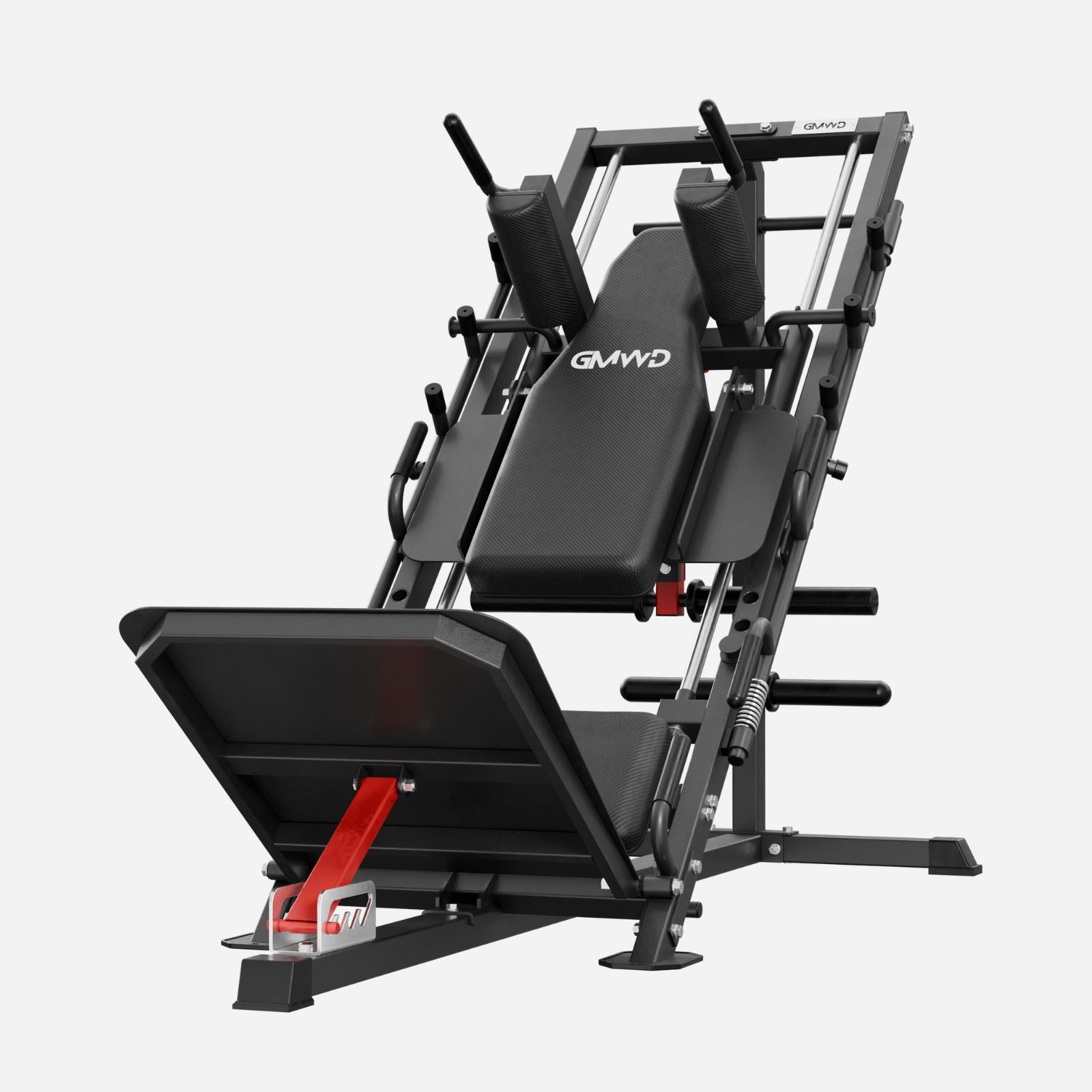
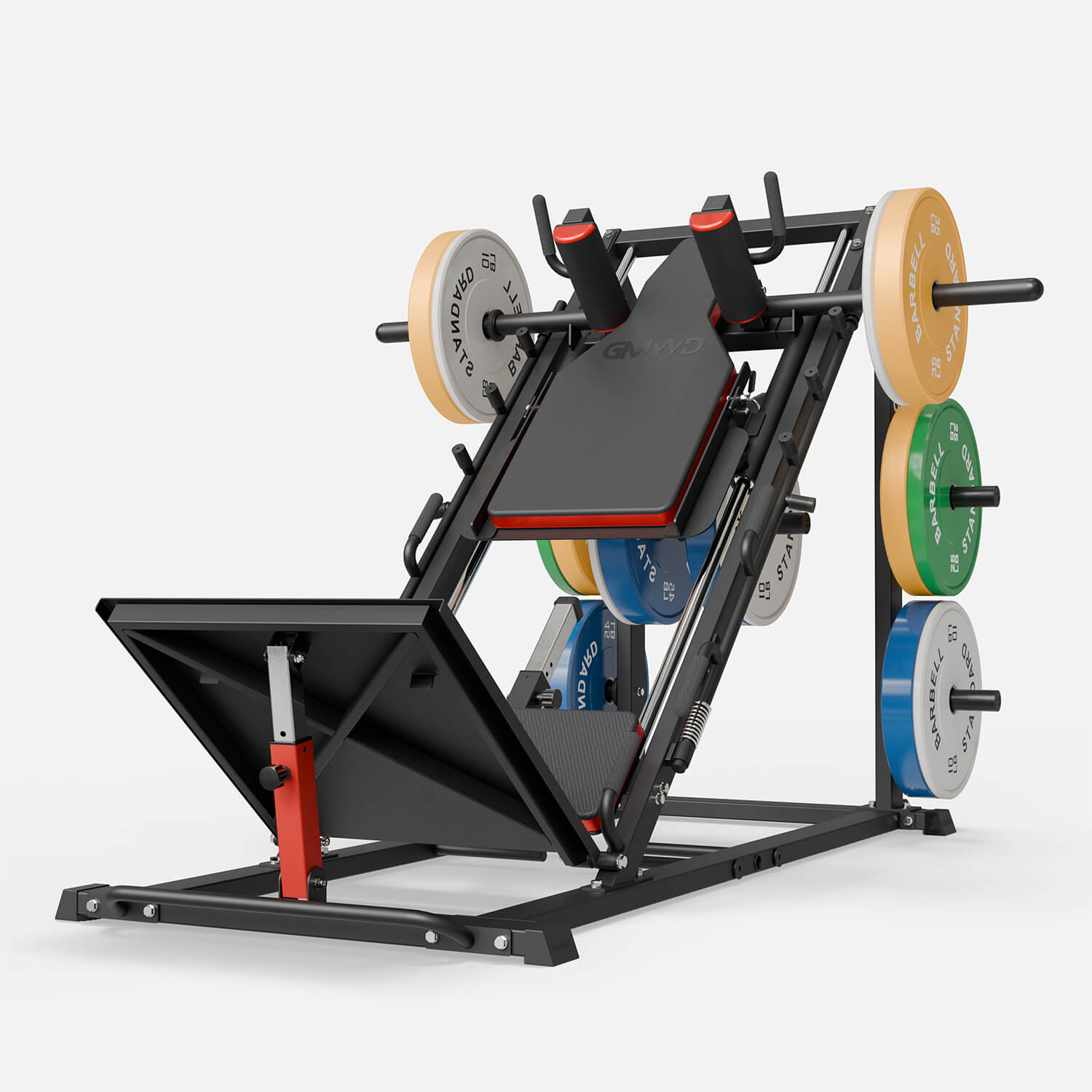



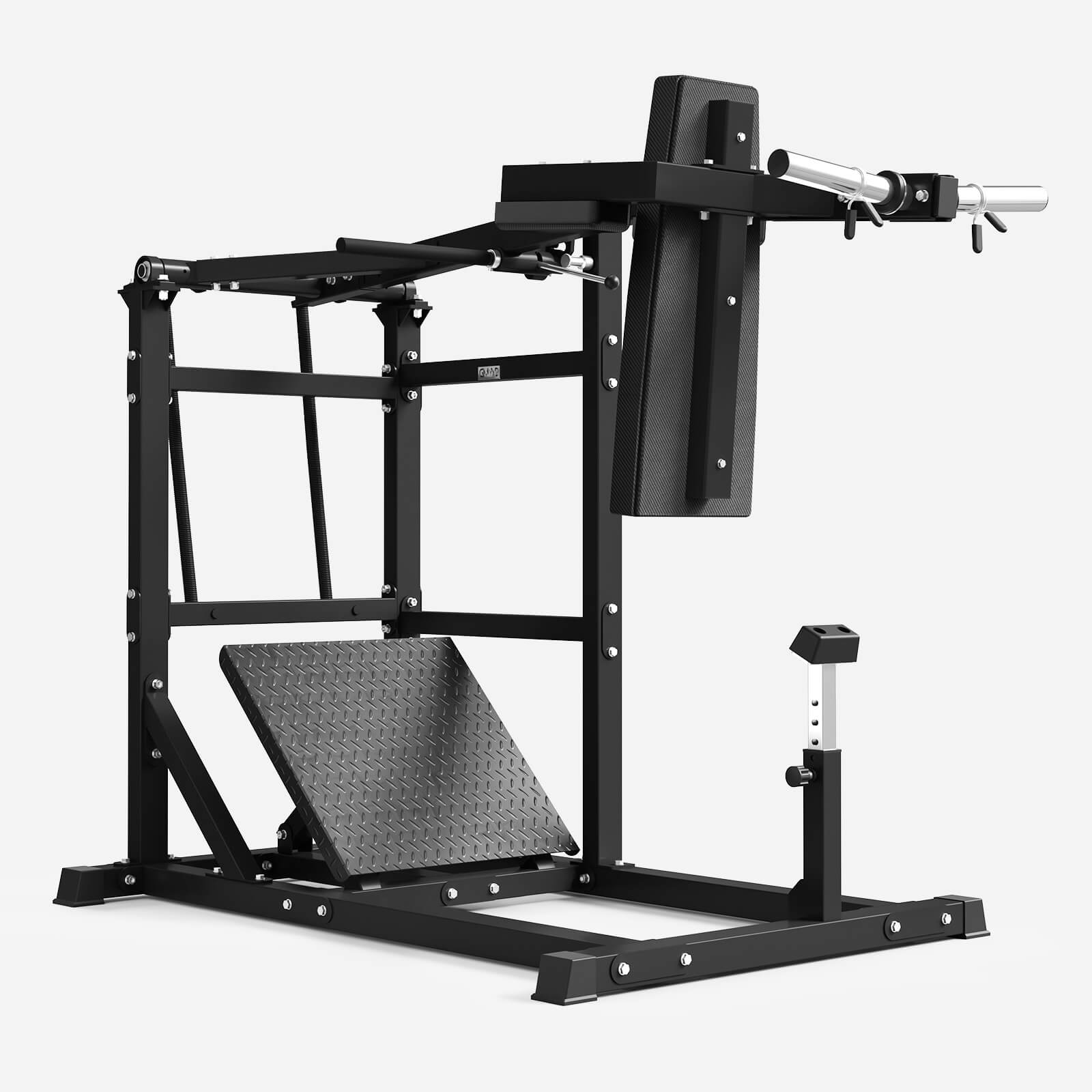






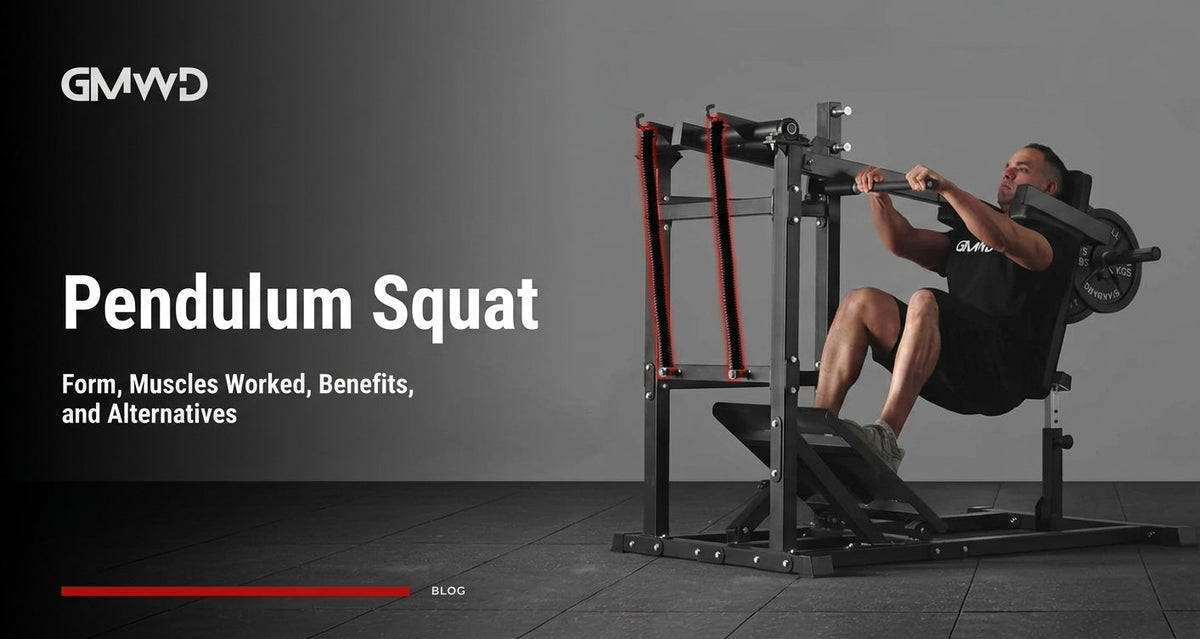
The pendulum squat gives lifters a way to train their legs through a deep, controlled range of motion with a supported movement path. Unlike a barbell squat, the machine handles much of the balance and stabilization demand, allowing you to focus more directly on knee and hip extension.
If you have used a hack squat or leg press, the setup will feel familiar. The backrest, shoulder pads, and footplate stabilize your torso while the pendulum arm follows a curved path. For lifters seeking quad-focused hypertrophy with less spinal fatigue, the pendulum squat is a reliable option that is easy to load progressively.
This guide covers how the machine works, proper form, muscles worked, benefits, common mistakes, programming, and the best alternatives.
Key Takeaways
- The pendulum squat uses a supported, curved movement path that places a high demand on the quads.
- Resistance changes throughout the range of motion and varies by machine design.
- Foot placement and depth can affect comfort and muscle emphasis.
- It is an excellent hypertrophy tool but does not fully replace the coordination demands of free-weight squats.
How Does the Pendulum Squat Work?
A pendulum squat uses a weighted lever arm that pivots along a fixed arc. Unlike a hack squat, which typically travels along an angled linear track, the pendulum arm swings through a curved path.
Because the resistance follows an arc, how difficult each part of the rep feels can change from the bottom to the top. The exact resistance profile depends on the machine's lever arm, pivot point, counterbalance, and overall geometry.
The curved path can also make deep squatting comfortable for many lifters because the machine allows the hips and knees to move through a supported squat pattern.
Pendulum Squat vs. Hack Squat
| Feature | Pendulum Squat | Hack Squat |
|---|---|---|
| Movement path | Curved arc | Angled linear track |
| Stability | High | High |
| Quad emphasis | High | High |
| Range of motion | Often allows deep flexion | Depends on machine and mobility |
| Resistance | Varies by machine geometry | Varies by machine geometry |
| Availability | Less common | Widely available |
Neither machine is universally better. Your anatomy, mobility, training goals, and the specific machine available should determine which one you use.
Pendulum Squat vs. Leg Press
The leg press allows substantial lower-body loading while your torso remains supported against a seat. However, going excessively deep can cause the pelvis to tuck if your hip mobility or setup limits your range of motion.
The pendulum squat keeps you in a more upright, supported position and may make deep knee travel easier to manage. Both exercises can be valuable for lower-body hypertrophy.
What Muscles Does the Pendulum Squat Work?
The quadriceps are the primary muscles trained during the pendulum squat. The rectus femoris, vastus lateralis, vastus medialis, and vastus intermedius all contribute to knee extension.
The glutes and adductors also contribute, particularly as squat depth increases and the hips move through greater flexion. The amount of contribution depends on foot placement, depth, individual anatomy, and machine design.
The calves help stabilize the ankle, while the core and upper back work isometrically to keep your body firmly positioned against the pads.
How to Perform the Pendulum Squat With Proper Form
1. Set Up the Machine
Adjust the backrest and shoulder pads so your upper back and hips remain firmly supported. The shoulder pads should sit across your upper traps rather than your neck.
Before adding weight, test the safety mechanism and learn how to engage and release the stops. Machine designs vary, so always follow the instructions for your specific model.
2. Find Your Stance
Start with your feet around shoulder-width apart and your toes slightly turned out. Keep your entire foot planted on the platform.
If your ankle mobility is limited, a slightly wider stance and moderate toe-out may help you reach a comfortable depth without your heels lifting.
3. Control the Descent
Lower yourself under control rather than dropping into the bottom. Aim for roughly a two- to three-second descent.
Squat as deep as you can while maintaining consistent contact with the backrest. If your hips or lower back begin to lift away from the pad, reduce your depth rather than forcing the movement deeper.
4. Drive Up
Push through your whole foot while keeping your shoulders against the pads. Extend your knees and hips together as you drive out of the bottom.
Avoid letting your hips rise significantly faster than your shoulders. Finish each repetition under control instead of aggressively locking out your knees.
Benefits of the Pendulum Squat
Quad-Focused Hypertrophy
The supported movement path removes much of the balance requirement found in free-weight squats. This allows you to focus on training the legs through challenging sets without stabilization becoming the main limiting factor.
For hypertrophy, this makes the pendulum squat particularly useful for accumulating quality quad volume.
Less Spinal Fatigue
The backrest and shoulder pads support your torso, reducing the balance and trunk-stabilization demands associated with a barbell squat. It does not eliminate spinal loading, but it can allow you to train your legs without adding the same level of whole-body fatigue.
This can be useful when your program already includes demanding exercises such as deadlifts, rows, or barbell squats.
Common Pendulum Squat Mistakes
Lifting Your Hips Off the Pad
This usually means you are forcing the range of motion beyond what you can currently control. Reduce your depth or adjust your stance until you can maintain a stable position.
Letting Your Heels Rise
A lifted heel reduces your stability and changes force distribution through the ankle and knee. Try a slightly wider stance or more toe-out if it helps you keep your entire foot planted.
Bouncing Out of the Bottom
Dropping into the bottom and relying on momentum makes the movement harder to control. Maintain tension and reverse the movement smoothly rather than rebounding aggressively.
Adding Weight Too Quickly
The plate weight does not tell the whole story. The machine's lever arm, counterbalance, and geometry can significantly affect how difficult the exercise feels.
Start light, learn the movement path, and add weight gradually while maintaining the same depth and technique.
How to Program the Pendulum Squat
For hypertrophy, 3 to 4 sets of 8 to 15 reps is a practical starting point. Most working sets can finish around 1 to 3 reps in reserve (RIR).
Use the pendulum squat as either your primary quad-focused movement or as a secondary exercise after heavier compound lifts.
Because the machine provides a stable movement path, it can also work well for higher-rep training. Drop sets and rest-pause sets are optional tools, but progressive overload and consistent technique should remain the foundation.
Pendulum Squat Foot Placement Guide
| Foot Position | Typical Effect |
|---|---|
| Lower / narrower | Usually increases knee flexion and quad demand |
| Shoulder-width / middle | Balanced starting position |
| Wider / more toe-out | May increase hip and adductor contribution |
| Higher on platform | May increase hip and glute contribution |
These effects vary between machines and individuals. Choose the position that allows you to maintain good control, full-foot contact, and a comfortable range of motion.
Pendulum Squat Alternatives
If your gym does not have a pendulum squat, several exercises can provide a similar training stimulus.
The hack squat is one of the closest alternatives because it provides a supported torso and guided movement path.
An angled leg press is another effective option for heavy quad and lower-body training. A Smith machine squat can also provide a guided bar path while retaining more stabilization demands.
For home gyms without machines, heel-elevated goblet squats and barbell front squats are useful alternatives for emphasizing the quads while maintaining a relatively upright torso.
Frequently Asked Questions
Does the Pendulum Squat Build Quads?
Yes. The pendulum squat places a high training demand on the quadriceps through substantial knee flexion and a supported movement path. This makes it an effective exercise for quad hypertrophy.
Can You Replace Squats With Pendulum Squats?
You can use the pendulum squat as your primary squat pattern if hypertrophy is your main goal. However, it does not fully replace the balance, coordination, and trunk-stabilization demands of a free-weight barbell squat.
Is the Pendulum Squat Better Than the Hack Squat?
Neither is universally better. The pendulum squat's curved path may make deep squatting comfortable for some lifters, while the hack squat offers a predictable linear path and is more widely available.
What Is a Good Pendulum Squat Starting Weight?
Start with an unloaded machine or the lightest practical resistance. Learn the machine's movement path, safety mechanism, depth, and foot position before adding plates. Increase the load gradually once you can perform consistent repetitions with good control.
How Often Should You Do Pendulum Squats?
For most lifters, one to two sessions per week is a practical starting point. Your ideal frequency depends on total weekly leg volume, recovery, and how much work you already perform with squats, leg presses, and other lower-body exercises.

Dejar un comentario
Todos los comentarios se revisan antes de su publicación.
Este sitio está protegido por hCaptcha y se aplican la Política de privacidad de hCaptcha y los Términos del servicio.