









Most people shopping for a leg extension machine focus on one thing first: how heavy the stack goes.
It makes sense. More weight feels like more capability.
But if you've actually trained on a few different machines, you start to notice something else pretty quickly. Two machines with identical weight stacks can feel completely different once you sit down and start moving.
One feels smooth and controlled. The other feels slightly off, even at lighter loads. Your knees don't quite track naturally. Your hips shift a little to compensate. You finish the set, but it doesn't feel like clean work.
The difference usually has nothing to do with strength.
It comes down to adjustability and ergonomics.
Most machines assume your body is "average." Yours isn't.
The problem with many leg extension and leg curl machines is simple: they're built around a fixed movement path. The manufacturer picks a "standard" setup and assumes most users will fit it well enough.
But in real training environments, there's no such thing as average.
A lifter at 5'0" and another at 6'4" will never naturally align the same way on a fixed machine. Even two people of the same height can have completely different femur and tibia proportions.
When alignment is off, the machine doesn't break—it just stops working with your body efficiently.
You'll usually feel it in subtle ways:
- The roller sits too high or too low on your shin
- Your knees drift forward or backward from the pivot point
- You lose tension at certain parts of the rep
- The movement feels "segmented" instead of smooth
None of these feel dramatic in the moment. But over time, they change how effectively you can train your quads or hamstrings.
Adjustability isn't comfort. It's mechanics.
A lot of people think adjustments are there to make the machine "more comfortable."
That's not really the point.
The real job of adjustability is to line up three things:
your knee joint
the machine's pivot point
and the resistance path
When those three points are aligned, the movement feels natural. The resistance stays consistent through the full range of motion, and your muscles—not your joints—take the load.
When they're not aligned, your body starts compensating.
That's when you see lifters subtly shifting their hips or pressing their feet into the roller differently just to make the movement feel right.
Good machines don't require that kind of adjustment from your body. They adjust to you instead.
The adjustments that actually change how the machine feels
Not every adjustment matters equally. Some are just convenience features. Others fundamentally change how the machine behaves under load.
1. Back pad position
This is the most important adjustment on the entire machine, even though it's rarely talked about.
If your torso is too far forward or too far back, your knee will never naturally line up with the machine's pivot point.
That's where most "awkward" leg extension experiences come from.
A properly adjustable back pad lets you find a position where your hips are stable and your knees track cleanly through the movement.
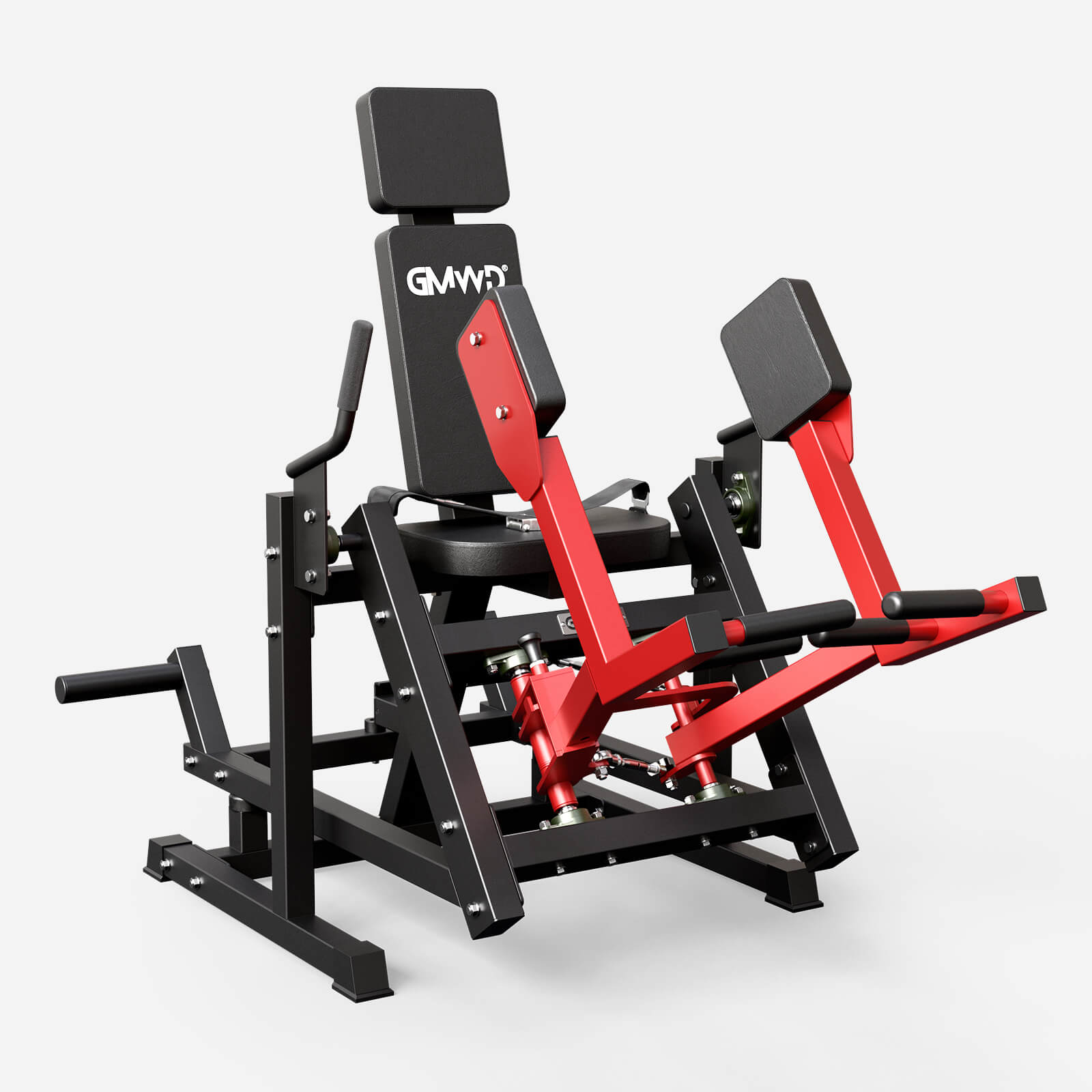
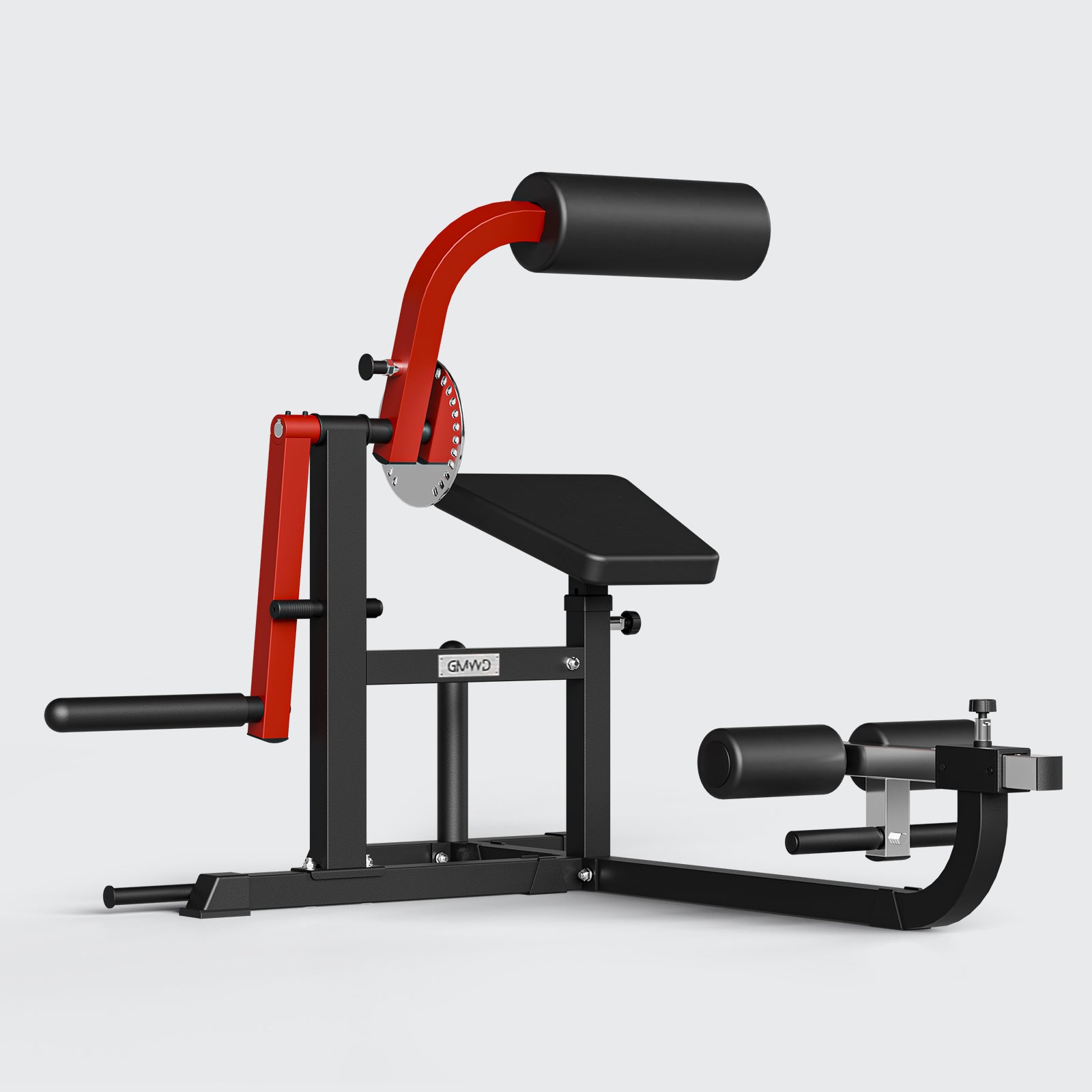
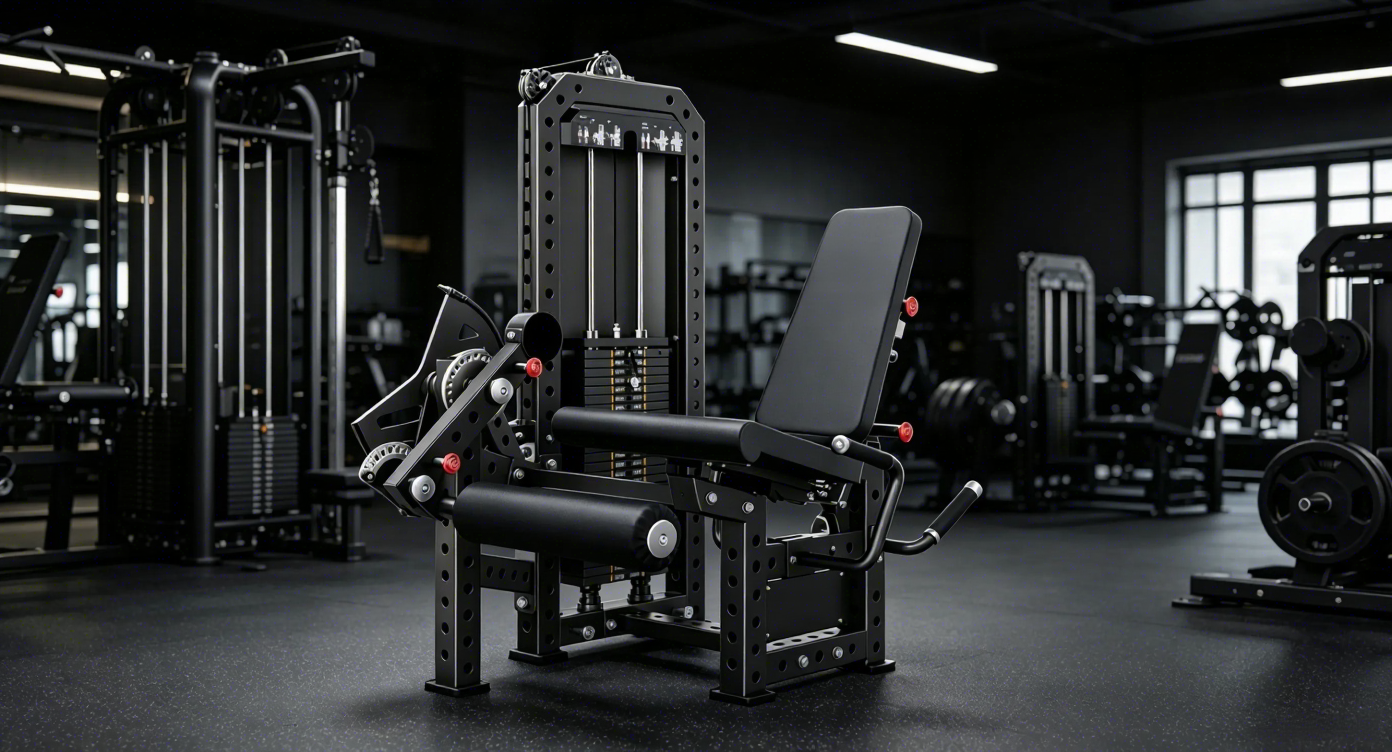
On the GMWD LE11, the back pad offers six adjustment positions, which is enough range to accommodate users from about 4'11" to 6'5" without forcing compromise positions.
2. Movement arm and roller positioning
Leg length changes everything in this exercise.
A longer femur changes leverage. A shorter tibia changes roller contact. If the starting position is fixed, someone will always be training slightly outside their ideal range.
That's why machines with multiple adjustment points on the movement arm matter more than people realize.
The LE11 uses a combination of 24 movement arm positions and 9 foot roller settings, which essentially lets you "rebuild" the starting geometry of the exercise for different users or training styles.
It's not about complexity. It's about matching the machine to the person using it.
3. Floating roller contact
This is one of those features you don't think about until you've trained without it.
A fixed roller stays in one position no matter how your leg moves. As your ankle angle changes through the rep, pressure shifts across your shin.
That's fine for light sets. Under heavier loads, it becomes noticeable.
A floating roller solves this by rotating slightly as your leg moves, keeping contact more consistent throughout the range of motion.
The result isn't dramatic—it's just smoother. Less pressure, less friction, fewer distractions during the set.
4. Frame clearance and movement path
Some machines quietly limit your range of motion without you realizing it.
Usually it's the front frame crossbar.
When that bar sits too close to your legs, it restricts how deep you can go into extension or curl positions. You don't notice it until you use a machine that doesn't have the limitation.
A recessed front frame removes that interference and allows the movement to feel more open at both ends of the range.
It's a small structural change, but it affects how "complete" each rep feels.
Why ergonomics matter more as you get stronger
Early on, most people don't notice small alignment issues. When the weights are light, your body can compensate easily.
But as you get stronger, those compensations start to matter more.
Poor alignment doesn't just reduce muscle activation—it changes where stress accumulates. Instead of loading your quads or hamstrings cleanly, you start distributing force through joints and stabilizers that weren't meant to handle it repeatedly.
That's when training starts to feel less efficient, even if you're lifting more weight.
Good ergonomics don't make the workout easier. They make the effort go exactly where it's supposed to go.
How the LE11 approaches this differently
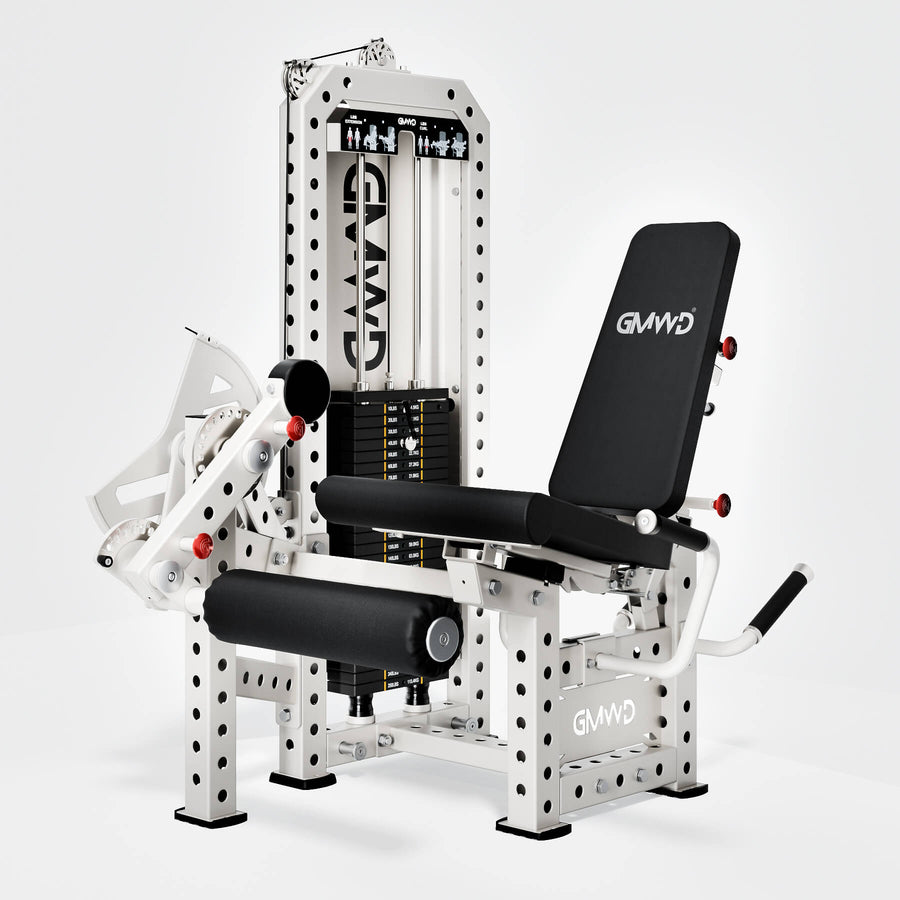
The idea behind the GMWD LE11 isn't to make a more complicated machine.
It's to remove the assumption that one setup fits everyone.
Instead of locking users into a single geometry, it allows multiple points of adjustment so the movement can be configured around the lifter's body.
That includes:
for torso alignment
for range customization
for leg length differences
for smoother contact
for unrestricted motion
Taken individually, none of these features are unusual.
Together, they change something more important: how consistent and natural the movement feels from rep to rep.
Final thought
Weight stacks get attention because they're easy to compare.
Adjustability doesn't.
But in actual training, especially on isolation machines like leg extensions and curls, the way a machine fits your body matters more than how heavy it goes.
If the alignment is right, the movement feels stable and predictable. If it isn't, no amount of extra weight will fix the way it feels.
That's why experienced lifters tend to care less about maximum resistance—and more about whether the machine actually fits them well enough to train without thinking about it.
And that's really what good ergonomics are supposed to do.


Dejar un comentario
Todos los comentarios se revisan antes de su publicación.
Este sitio está protegido por hCaptcha y se aplican la Política de privacidad de hCaptcha y los Términos del servicio.