

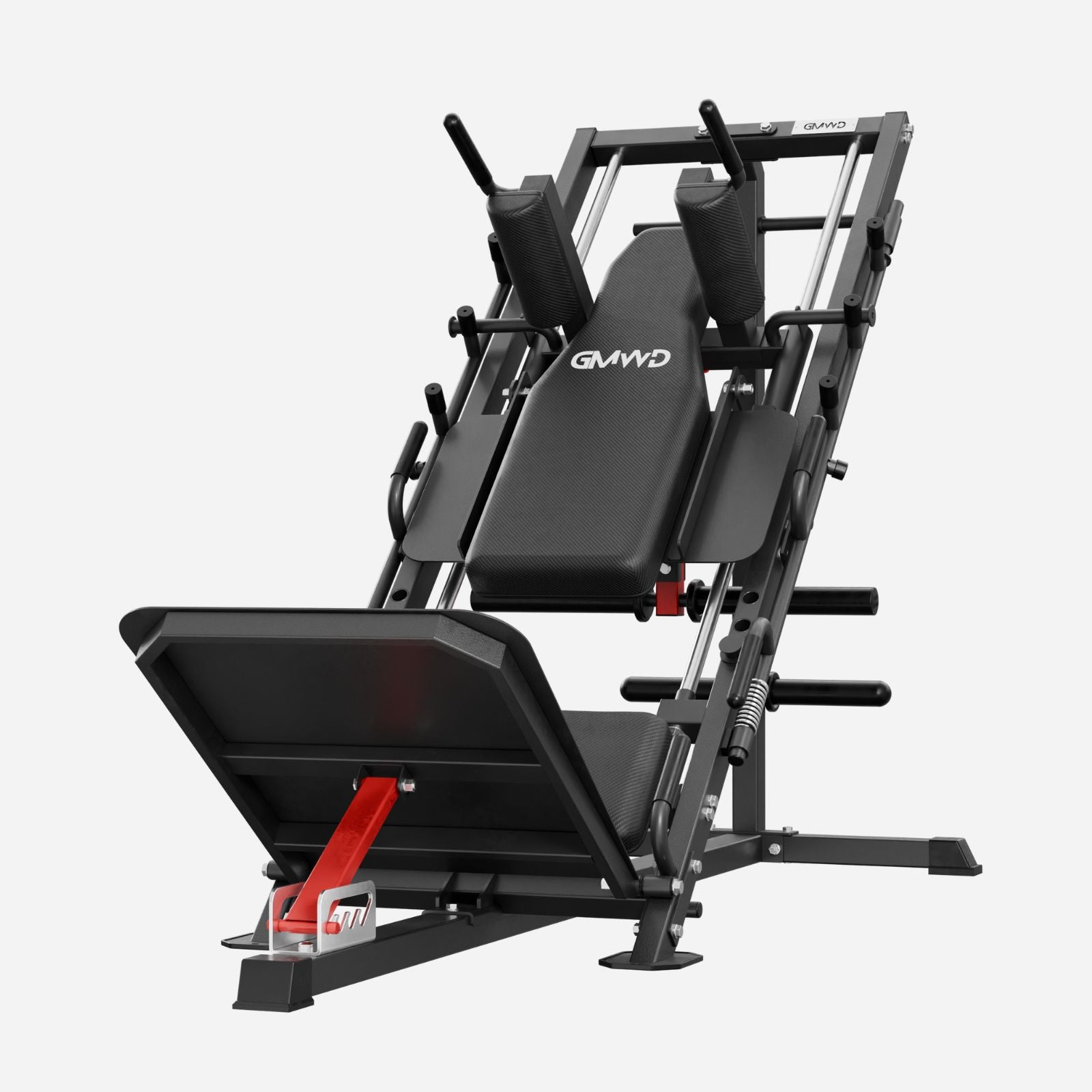
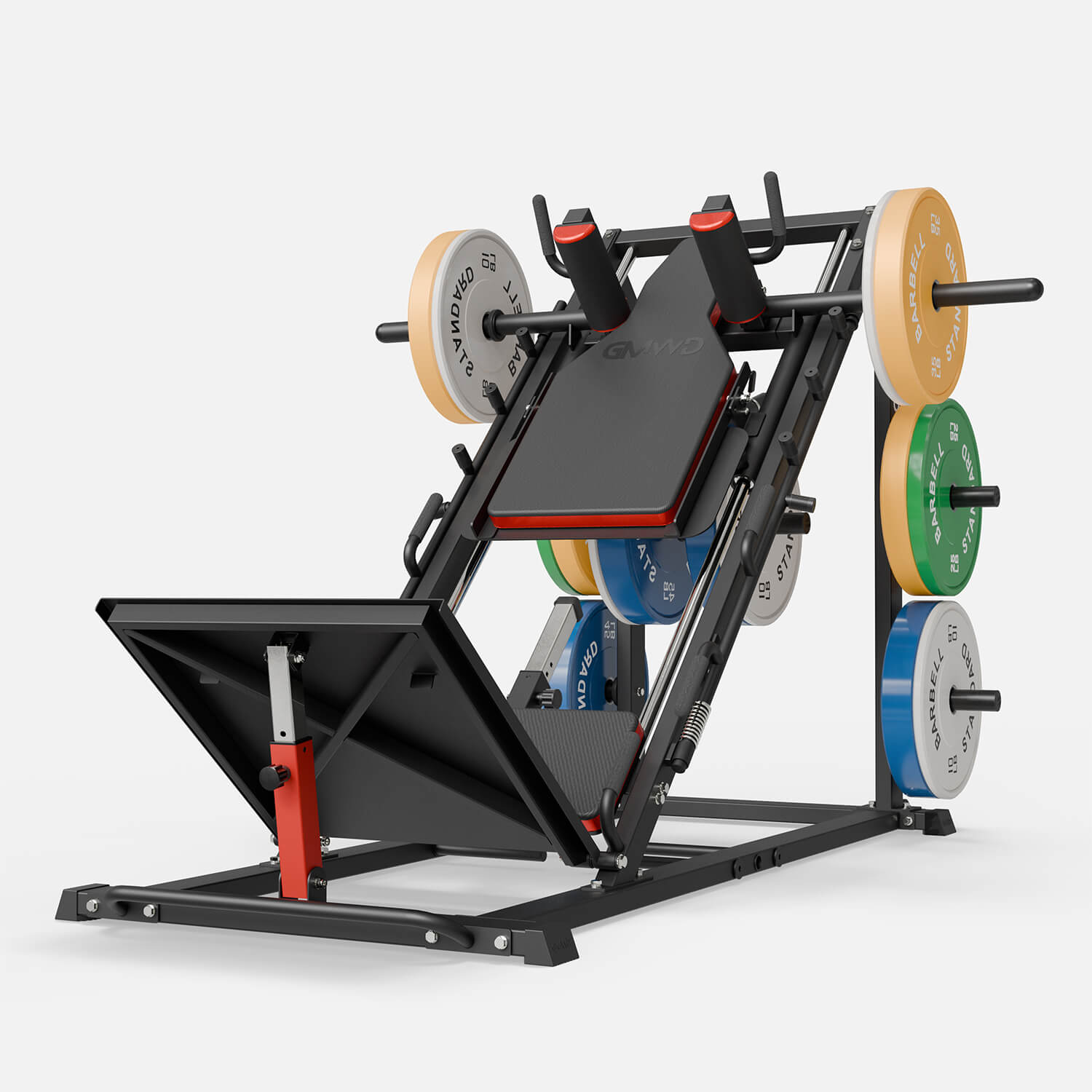





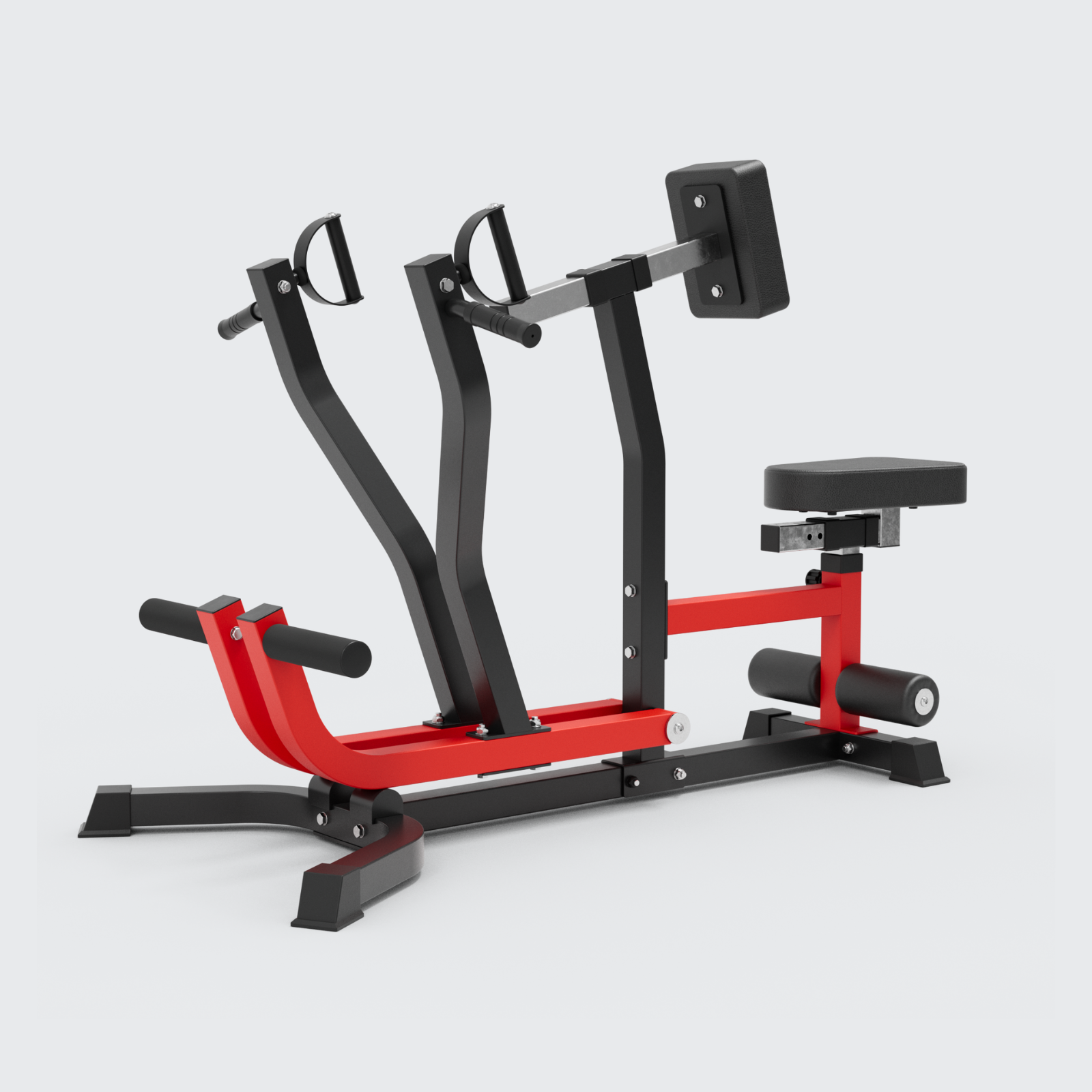
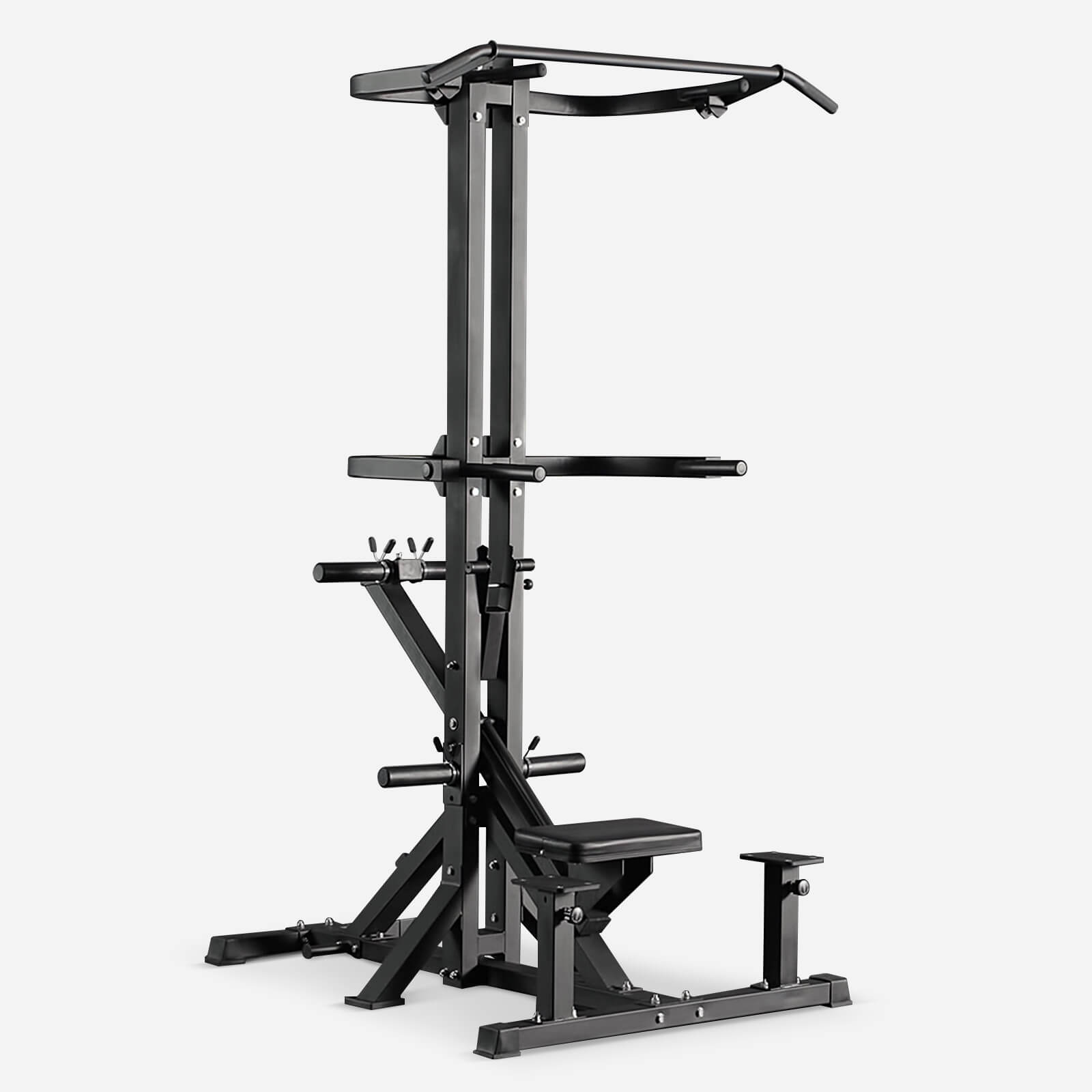


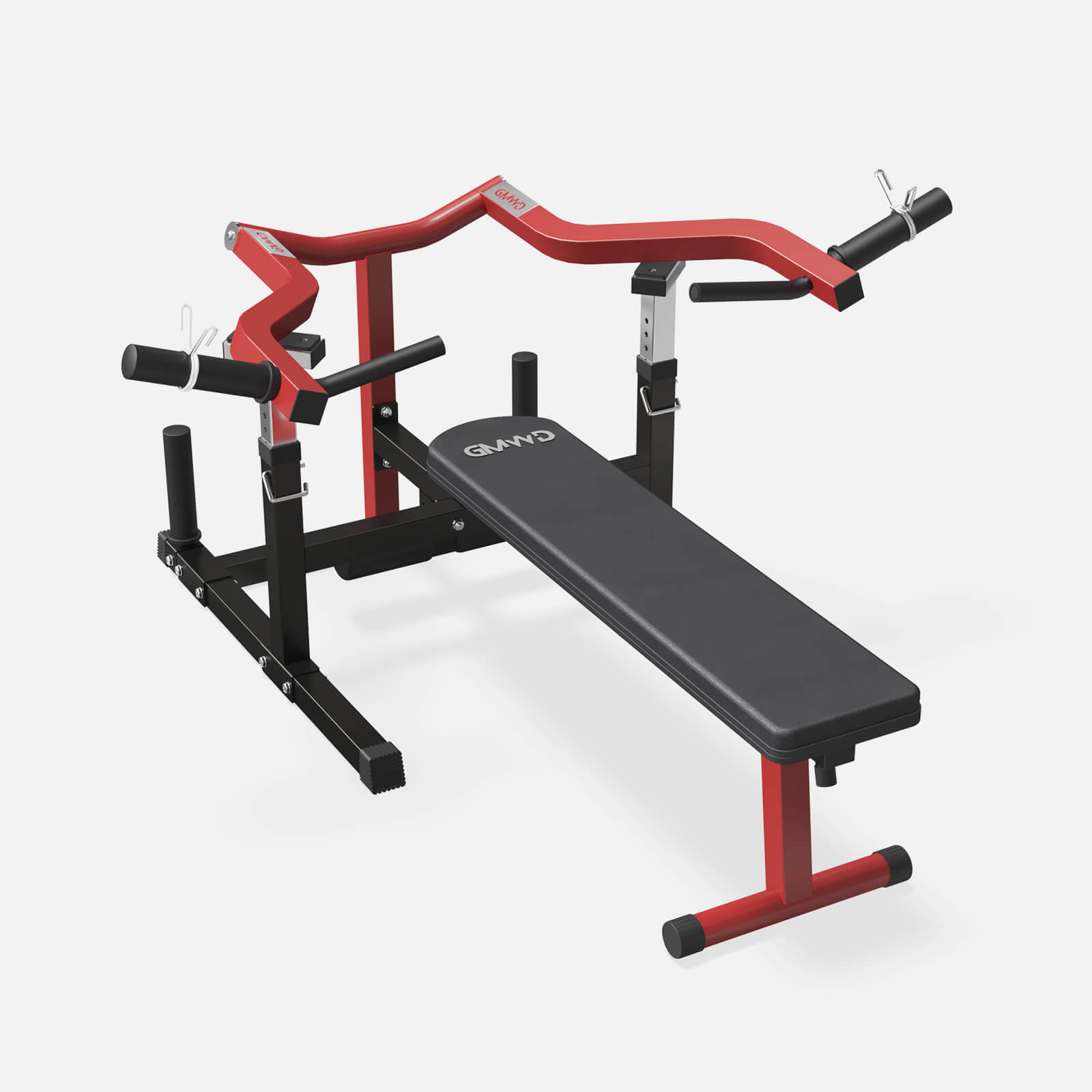
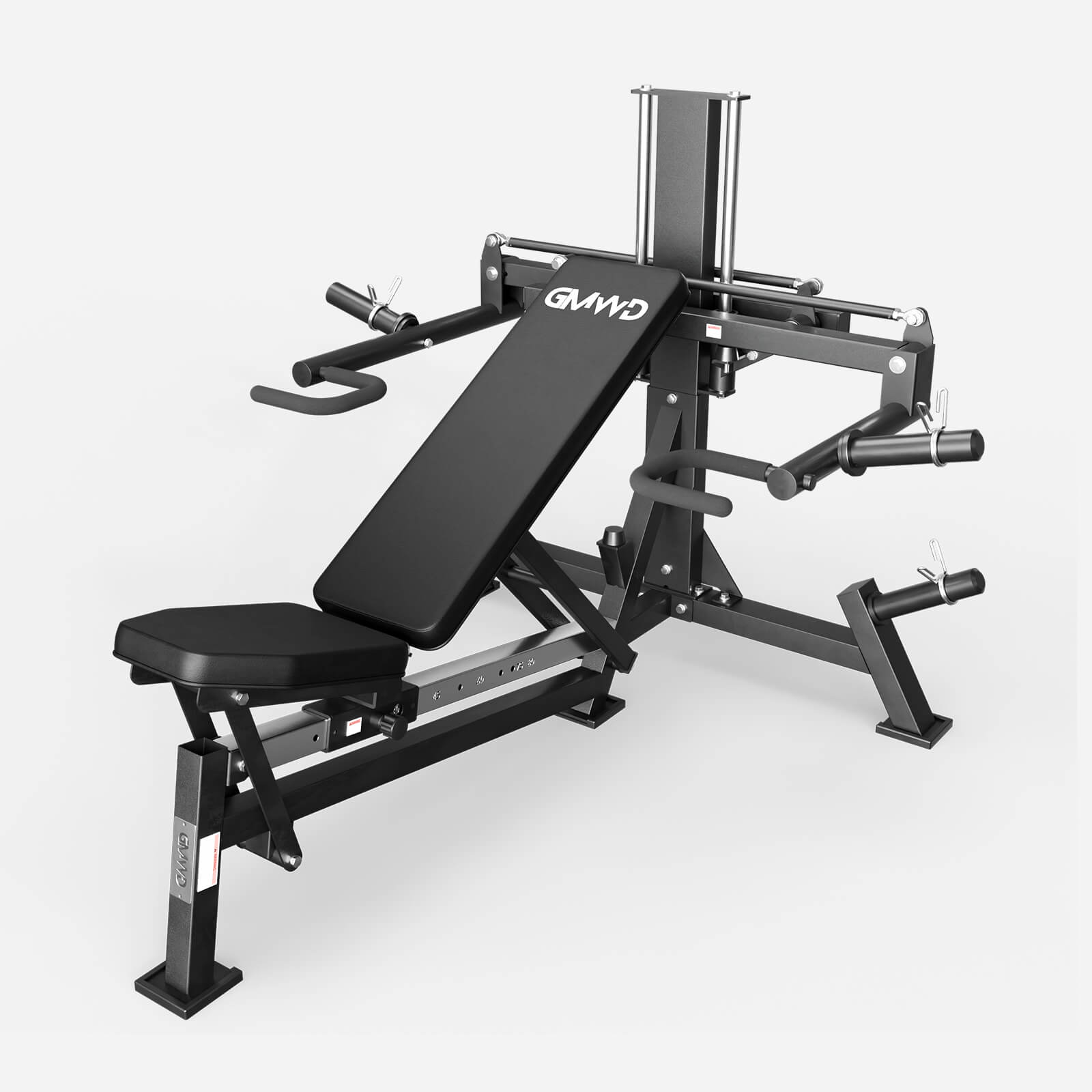


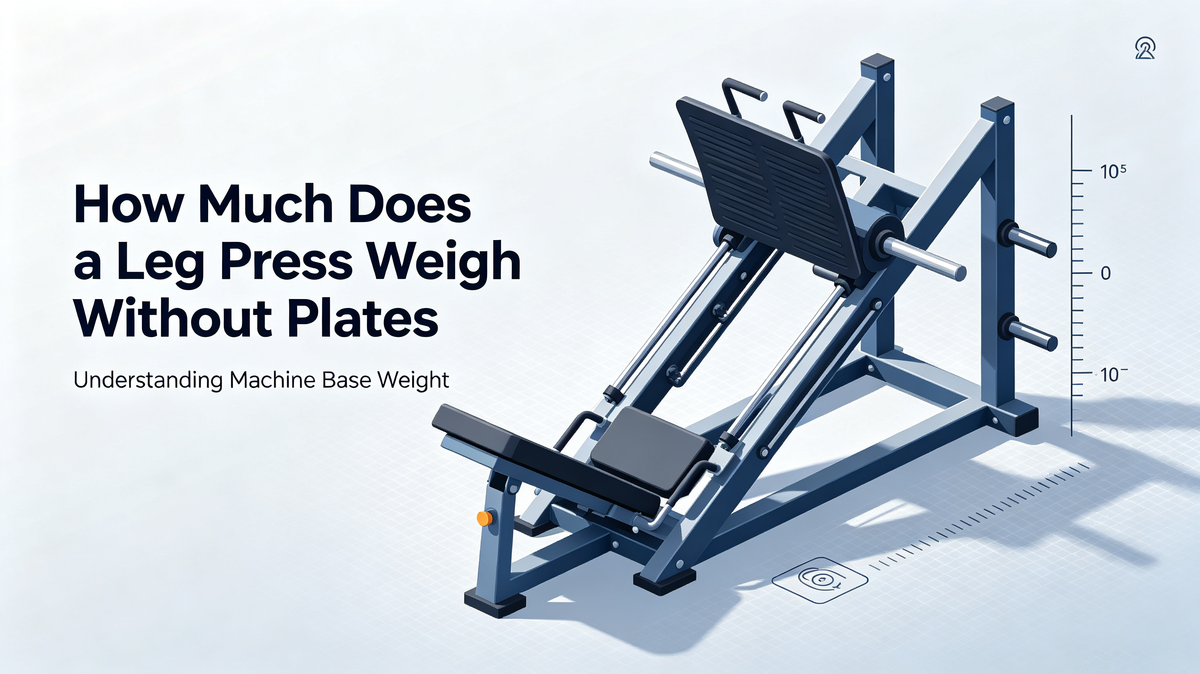
When tracking progressive overload on the leg press, one question often gets overlooked: How much does the leg press sled weigh without any weight plates loaded?
The answer depends on the type and design of the machine. A commercial 45-degree plate-loaded leg press may have a sled weighing more than 100 pounds, while a selectorized machine may have a much lower starting resistance.
It's also important to distinguish between sled weight and starting resistance. The physical weight of the sled isn't always the same as the resistance you feel during a repetition.
In this guide, we'll break down typical leg press starting weights, explain how a 45-degree angle affects resistance, and show you how to track your leg press weight consistently.
Quick Answer: How Much Does a Leg Press Weigh Without Plates?
For a 45-degree plate-loaded leg press, an unloaded sled commonly weighs around 75–125+ lbs, although some machines can be significantly lighter or heavier.
Other leg press designs vary considerably:
| Leg Press Type | Typical Starting Point |
|---|---|
| 45-Degree Plate-Loaded Leg Press | ~75–125+ lb sled weight |
| Vertical Leg Press | Model-dependent |
| Selectorized Seated Leg Press | Often ~10–25 lb starting resistance |
| Compact Home Gym Leg Press | Model-dependent |
| Leverage / Pivot Leg Press | Model-dependent |
These are general ranges rather than universal standards. Always check the manufacturer's specifications for your specific machine when available.
How Much Does a Leg Press Sled Weigh?
1. 45-Degree Plate-Loaded Leg Press

Typical sled weight: approximately 75–125+ lbs
The 45-degree leg press is one of the most common plate-loaded designs in commercial gyms and home gyms. The sled typically includes the footplate, weight posts, steel frame components, rollers or bearings, and other moving parts.
Many commercial-style machines fall around 75–125 pounds, but heavy-duty models can weigh considerably more.
Because manufacturers use different designs and materials, there is no universal sled weight for every 45-degree leg press.
2. Vertical Leg Press
Starting resistance: highly model-dependent
Vertical leg presses move the resistance directly upward rather than along a 45-degree incline.
In a simple vertical system, gravity acts directly against the moving load. However, actual machines can use different sled, bearing, lever, pulley, or counterbalance systems.
For that reason, there isn't a reliable universal starting-weight range for all vertical leg presses.
Check the manufacturer's stated starting resistance for the exact model.
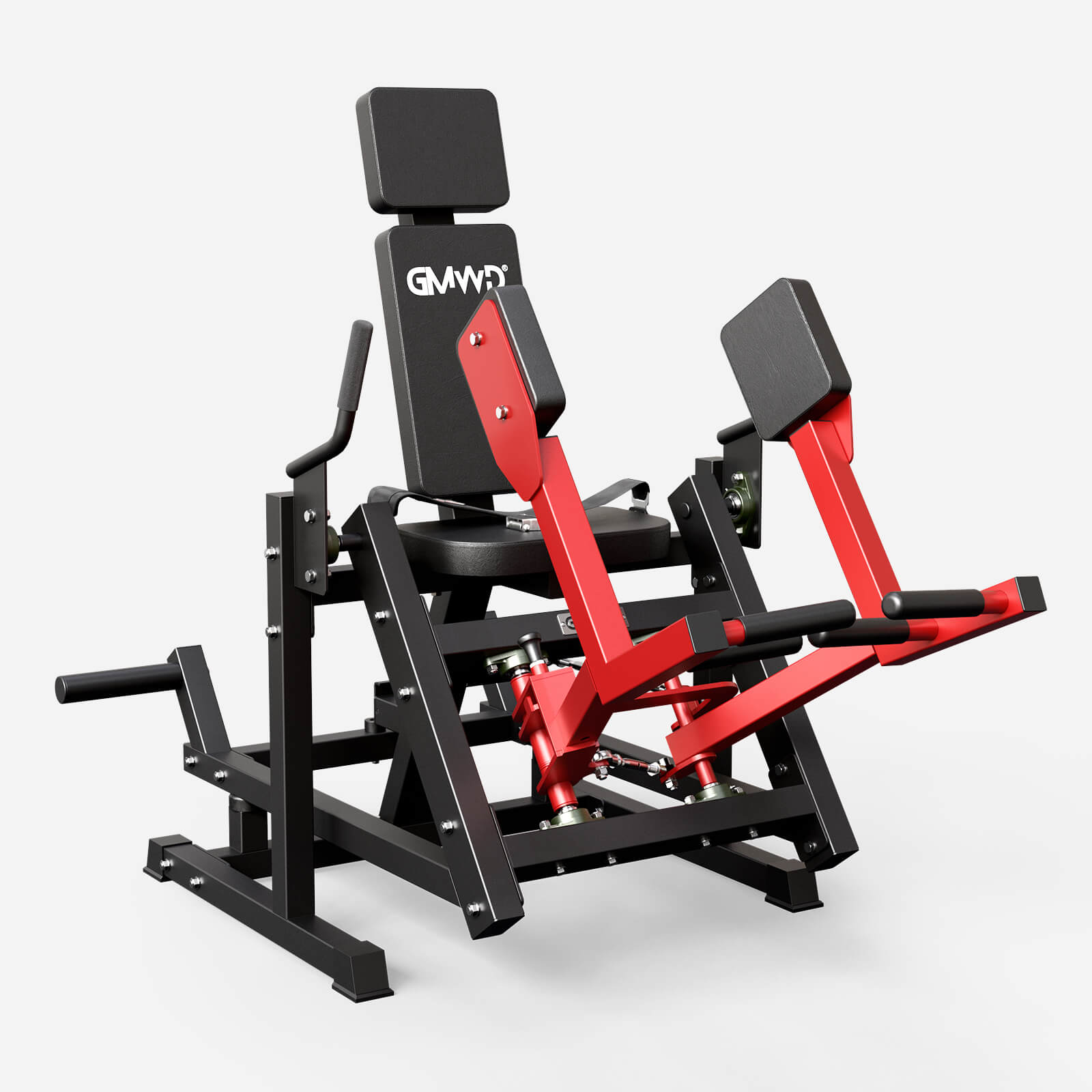
3. Horizontal & Seated Selectorized Leg Press
Typical starting resistance: often around 10–25 lbs
Selectorized leg presses use a weight stack rather than loading plates directly onto a sled.
The resistance depends on the machine's weight stack, pulley ratio, cable routing, and linkage design.
For example, a 100-lb weight stack does not necessarily mean exactly 100 lbs of resistance at the footplate. Some machines use mechanical ratios that change the resistance.
This is why the manufacturer's starting resistance is more useful than simply looking at the weight-stack number.
4. Compact Home Gym Leg Press
Starting resistance: model-dependent
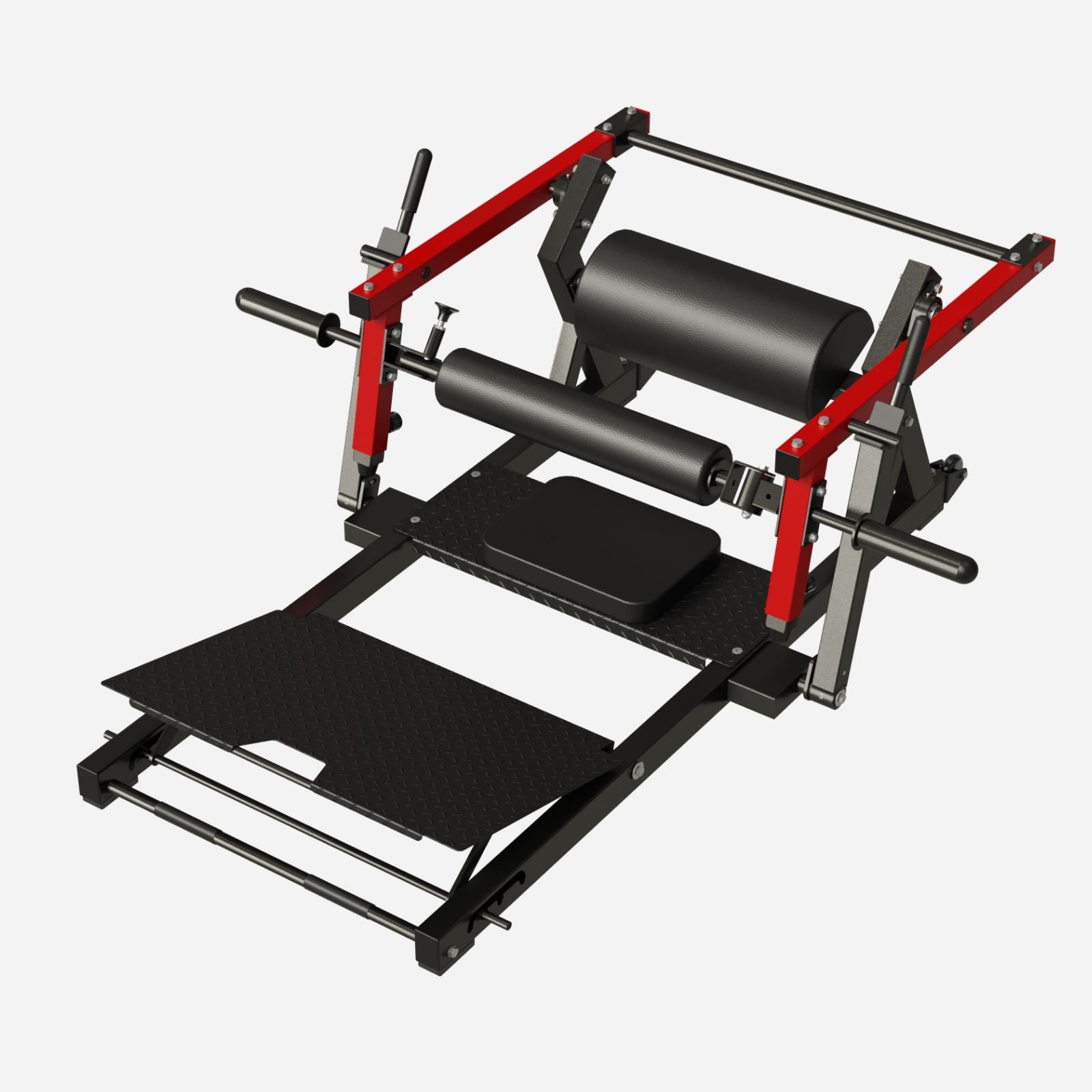
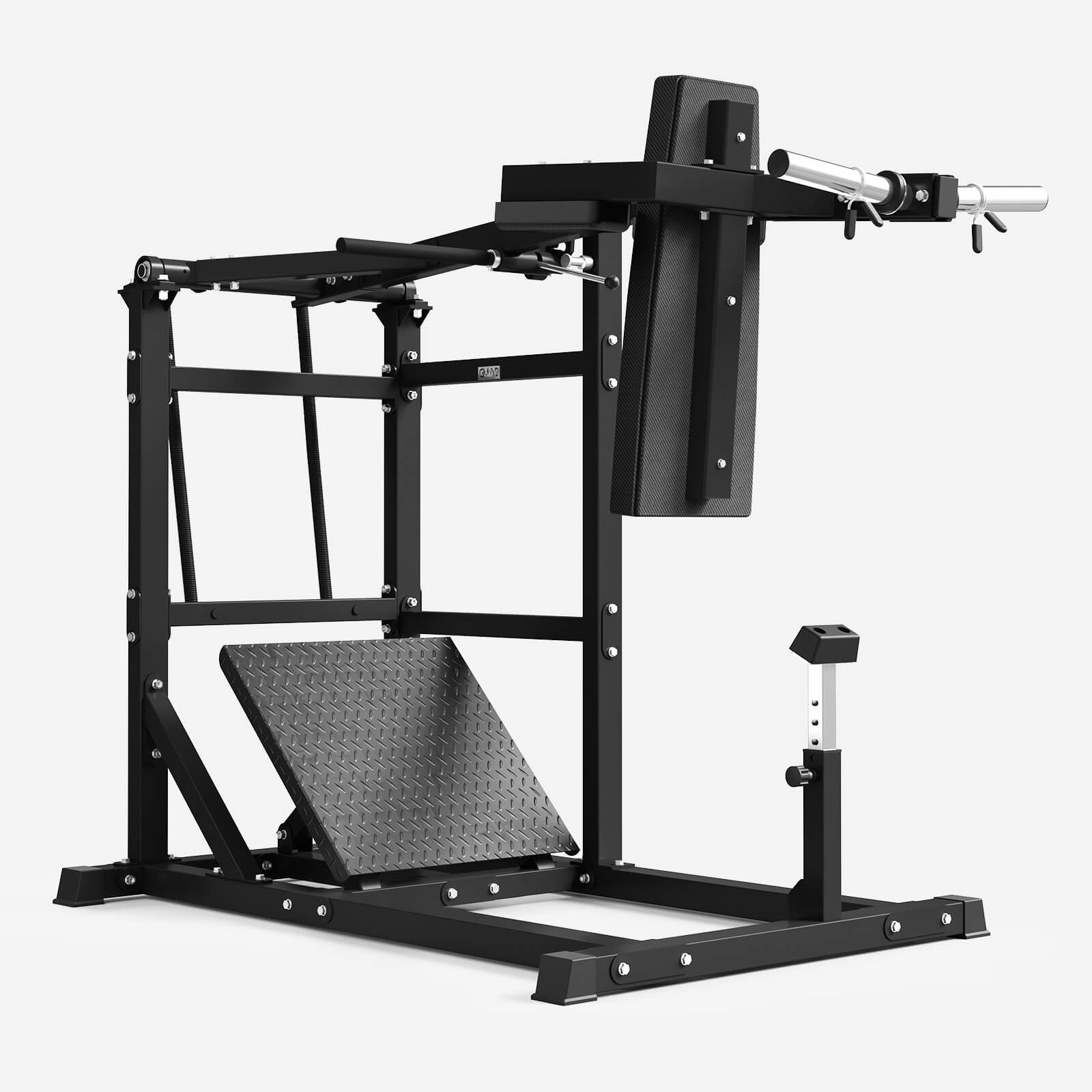
Compact home gym leg presses come in many different designs. Some use an inclined sled, while others combine a leg press with a power rack, cable system, or other training station.
Because of these differences, there isn't a reliable universal sled-weight range.
When comparing compact leg presses, look for specifications such as:
- Starting resistance
- Sled or carriage weight
- Weight capacity
- Track angle
- Pulley ratio
- Bearing or roller system
Leg Press Weight Comparison Chart
| Leg Press Type | Starting Point | What Determines Resistance? |
|---|---|---|
| 45° Plate-Loaded | ~75–125+ lb sled | Sled weight, angle, friction |
| Vertical | Model-dependent | Gravity and machine geometry |
| Compact Home Gym | Model-dependent | Sled weight, angle, friction |
| Selectorized Seated | Often ~10–25 lb | Weight stack and pulley ratio |
| Leverage / Pivot | Model-dependent | Lever ratio and geometry |
Remember: The number of plates loaded isn't necessarily the same as the actual resistance you experience.
Why Does a 45° Leg Press Feel Lighter Than the Loaded Weight?

On a simple 45-degree leg press, you aren't moving the entire weight directly against gravity.
The theoretical gravitational component along the sled's path can be calculated as:
Since sin(45°) ≈ 0.707, a 100-lb unloaded sled would have a theoretical gravitational component of:
If you add 400 lbs of plates:
500 × 0.707 ≈ 353.5 lbs
However, this is only a simplified physics calculation. The actual resistance can vary because of friction, bearings, rollers, machine geometry, and other mechanical factors.
The 45-degree calculation should not be applied directly to selectorized, cable-driven, or leverage-based leg presses.
Should You Count the Sled Weight in Your Workout Log?

There's no single correct method. Consistency is more important than the method you choose.
Option A: Log Plate Weight Only
For example:
Leg Press: 4 plates per side × 10 reps
This is the simplest method and works well if you consistently train on the same machine.
Option B: Include Starting Resistance
If the manufacturer provides a confirmed starting resistance, you can record it along with the plates.
For example:
400 lbs plates + 80 lbs starting resistance
This provides a more complete record, especially if you train on multiple machines.
However, adding the sled or starting resistance doesn't make different leg press machines directly comparable. Machine angle, friction, pulley ratios, and geometry can all affect how the exercise feels.
How Do I Find the Starting Weight of My Leg Press?
The most reliable source is the manufacturer's specifications for your exact model.
Check:
- The product page
- The owner's manual
- The machine's specification label
- Manufacturer support documentation
Look for terms such as:
- Starting resistance
- Sled weight
- Carriage weight
- Unloaded resistance
If the information isn't listed, contact the manufacturer with the exact model number.
Don't use the total weight of the assembled machine as the sled weight. A complete commercial leg press can weigh several hundred pounds, while its moving sled weighs much less.
Frequently Asked Questions
1. How much does a leg press sled weigh without plates?
Many commercial-style 45-degree leg press sleds weigh approximately 75–125+ lbs, but the exact weight varies by model.
2. How much does a 45-degree leg press weigh without plates?
A typical commercial-style 45-degree sled may weigh around 75–125+ lbs. The theoretical gravitational component at a 45-degree angle is about 70.7% of the load, before friction and other mechanical factors.
3. Does the leg press starting weight include the sled?
It depends on how the manufacturer defines its specifications. Sled weight refers to the physical weight of the moving carriage, while starting resistance refers to the resistance you experience with no additional plates loaded. They are not necessarily the same.
4. Should I count the sled weight when tracking my leg press?
You can, but you don't have to. If you always use the same machine, tracking the plates you add is usually sufficient for measuring progressive overload. If you switch between machines, recording the manufacturer's starting resistance can provide additional context.
Looking for a Heavy-Duty, Space-Saving Leg Press for Your Home Gym?
At GMWD Fitness, we design high-performance strength equipment for home and light-commercial training environments, combining heavy-duty steel construction with smooth, reliable movement systems.
Whether you're building a complete home gym or upgrading your lower-body training setup, the right leg press can give you a stable and effective way to train your quads, hamstrings, and glutes.
Explore GMWD Fitness strength equipment and build your home gym around your training goals.


Dejar un comentario
Todos los comentarios se revisan antes de su publicación.
Este sitio está protegido por hCaptcha y se aplican la Política de privacidad de hCaptcha y los Términos del servicio.