









When you evaluate a leg extension or leg curl machine, you usually focus on one thing first: weight capacity.
But experienced lifters know that the real difference between an average machine and a great one often comes down to two overlooked factors:
- Smoothness of motion
- Resistance curve
These two elements directly affect:
- muscle activation
- joint comfort
- training efficiency
- hypertrophy potential
- long-term training consistency
And in many cases, they determine whether a machine feels “commercial-grade” or not.
What Is Smoothness of Motion?
Smoothness of motion refers to how consistently the resistance travels throughout the movement.
On a well-designed machine:
- resistance feels fluid
- transitions stay controlled
- tension remains predictable
- movement tracks naturally with the body
On a poorly designed machine, users often notice:
- jerky resistance
- dead spots
- sudden tension shifts
- awkward knee tracking
- friction during reps
This becomes especially noticeable during:
- slow eccentrics
- high-rep hypertrophy work
- unilateral training
- rehabilitation exercises
The smoother the movement, the easier it is to maintain constant muscular tension without compensating through momentum.
Why Resistance Curve Is So Important
A resistance curve describes how difficult an exercise feels at different points in the range of motion.
Your muscle does not produce equal force throughout a movement.
For example:
- During leg extensions, the quadriceps are often strongest near the top portion of the rep.
- During leg curls, hamstring leverage changes significantly throughout the movement.
Unfortunately, many traditional machines provide the opposite resistance profile:
- too easy where muscles are strongest
- too difficult where joints are weakest
That creates:
- reduced muscle stimulus
- inconsistent tension
- lower-quality contractions
- unnecessary joint stress
A better resistance curve matches the body’s natural strength profile more effectively.
How Modern Machines Improve the Resistance Curve
Higher-end machines improve resistance curves through:
- cam systems
- cable geometry
- leverage adjustments
- accommodating resistance
- band integration
One of the most effective methods is combining selectorized resistance with resistance bands.
As the band stretches, tension increases progressively.
This creates:
- stronger peak contraction
- better tension at lockout
- reduced “rest points”
- greater time under tension
For hypertrophy-focused training, this often leads to:
- improved quad engagement
- stronger hamstring contractions
- enhanced muscle fatigue
- more efficient isolation work
How GMWD’s New Leg Machine Approaches Both
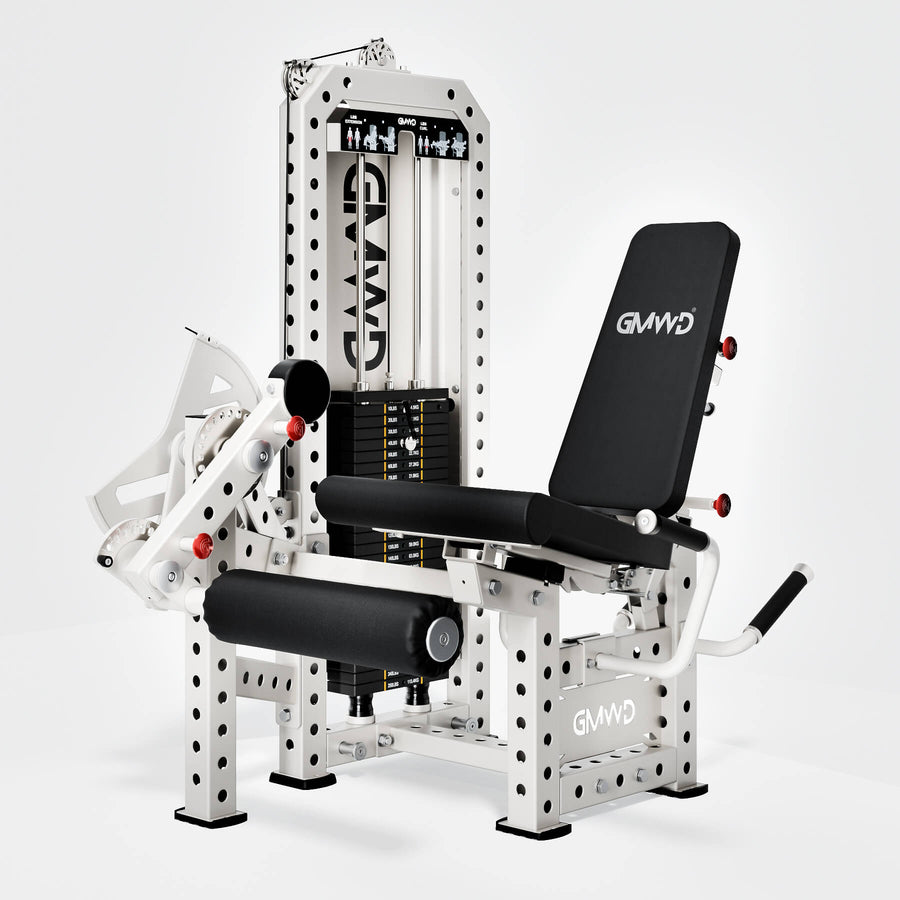
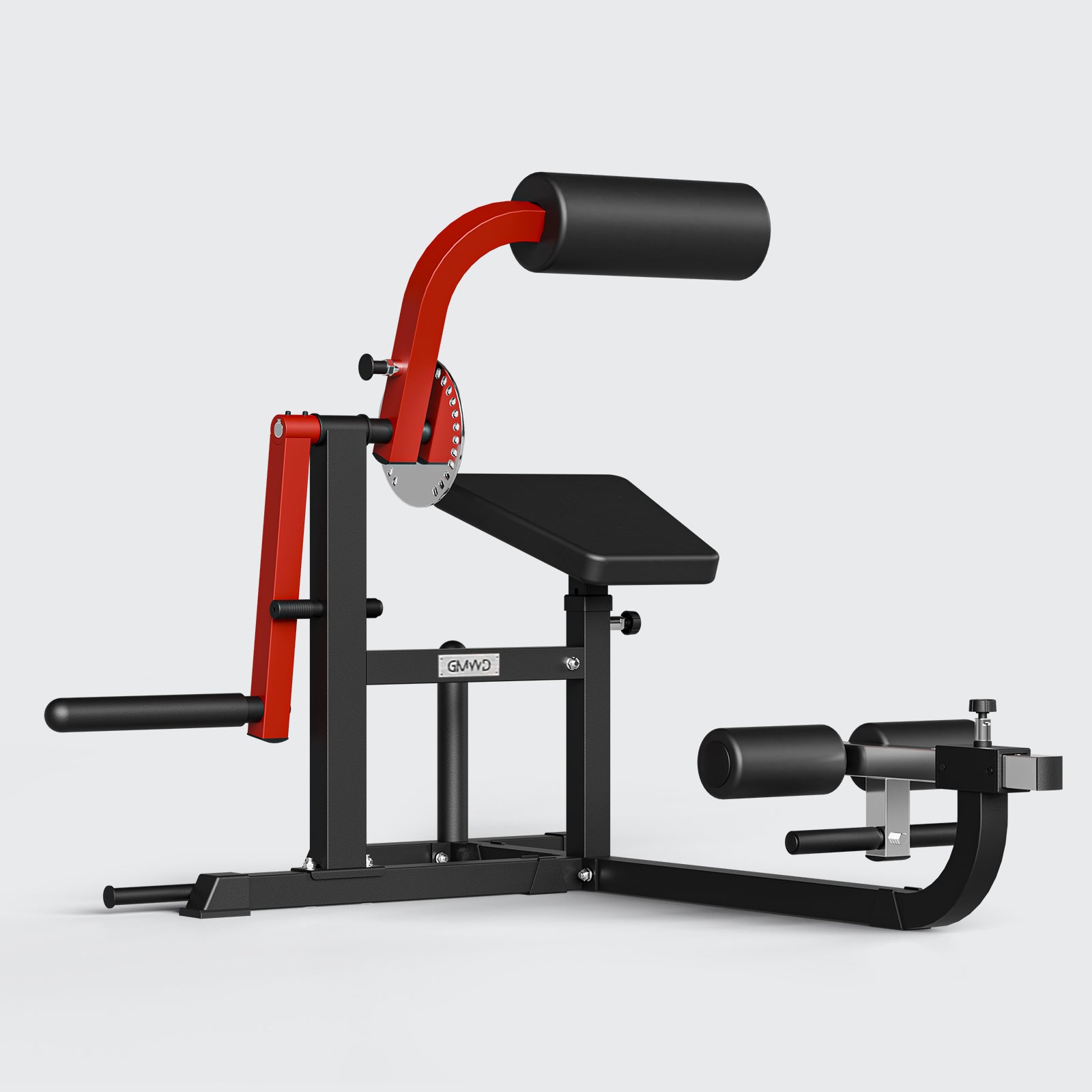
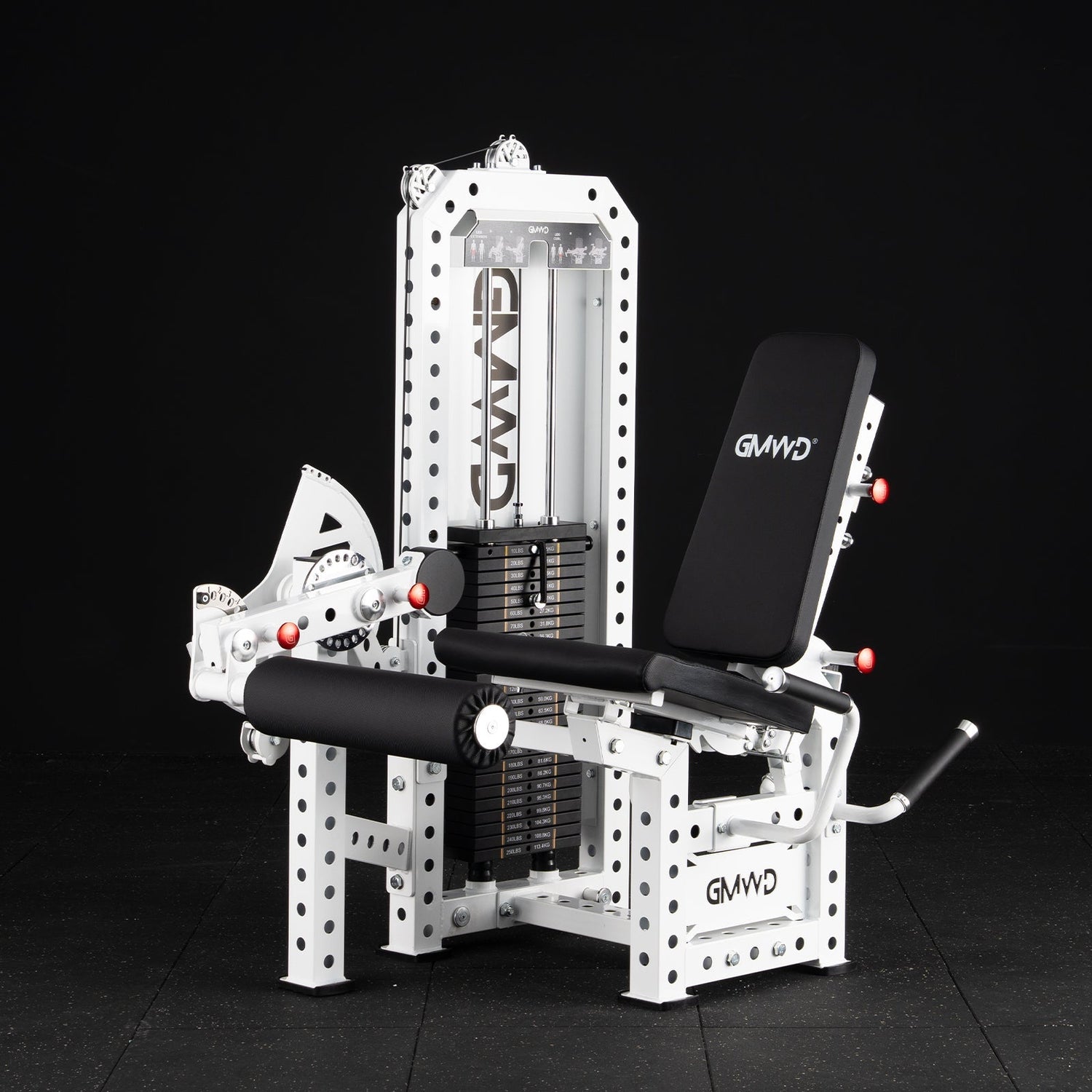
The new selectorized leg extension and curl machine from GMWD Fitness was designed specifically around these two principles:
- smooth movement quality
- optimized resistance feel
Instead of focusing only on adding more weight, the machine emphasizes how the resistance is delivered throughout the rep.
Smoothness Starts with Biomechanics
Several design elements contribute to a more natural motion path.
Floating Leg Roller
The floating leg roller rotates naturally during movement, helping the pad maintain better contact with the lower leg throughout the rep.
Benefits include:
- reduced friction against the shin
- smoother transitions
- less pressure buildup
- more consistent force application
This creates a noticeably more refined training feel compared to fixed rollers.
Adjustable Alignment System
The machine also includes:
- adjustable seat pad
- adjustable back pad
- adjustable leg roller positions
Proper alignment between the user’s knee joint and the machine pivot is critical for:
- smoother tracking
- safer movement mechanics
- improved muscle isolation
- reduced knee stress
This becomes especially important for users with different limb lengths or mobility levels.
Recessed Front Frame Design
Many compact machines limit movement depth because the frame interferes with the user’s legs.
The recessed front crossmember design helps create:
- cleaner movement mechanics
- improved range of motion
- less obstruction during reps
- smoother transitions between exercises
The result is a more natural extension and curl pattern.
Resistance Curve Enhancements
One of the standout features is the combination of:
- selectorized weight stack
- resistance band integration
- true 1:1 cable ratio
The 1:1 ratio ensures the resistance feels accurate and predictable.
Meanwhile, the resistance bands increase tension progressively as the movement approaches peak contraction.
In practical training, this means:
- leg extensions feel more demanding at the top
- hamstrings stay loaded longer during curls
- muscles remain under tension through a greater percentage of the rep
This creates a training stimulus that feels significantly different from traditional machines with flat resistance profiles.
Why This Matters for Real Training
Better smoothness and resistance delivery are not just “premium features.”
They directly influence:
- training quality
- comfort
- recovery
- exercise execution
- long-term consistency
For hypertrophy training, smoother reps and improved tension profiles can help lifters:
- focus more on contraction
- reduce momentum
- maintain better control
- improve mind-muscle connection
For rehabilitation or joint-conscious users, smoother motion can also reduce unnecessary stress on the knees and connective tissue.
Final Thoughts
In lower-body isolation training, the best machines are not always the ones with the heaviest stacks.
Often, the biggest difference comes from:
- how smoothly the machine moves
- how naturally resistance matches the body
That’s where thoughtful engineering matters.
The selectorized leg extension and curl machine from GMWD Fitness was designed around exactly those principles — combining smooth biomechanics, progressive resistance, and compact functionality into a more refined lower-body training experience.


Leave a comment
All comments are moderated before being published.
This site is protected by hCaptcha and the hCaptcha Privacy Policy and Terms of Service apply.